Dyslexia Awareness Month
October is Dyslexia Awareness Month
October is recognised worldwide as Dyslexia Awareness Month, a time to come together to raise awareness, share resources, and tell stories about dyslexia successes.
Get involved this October and make a difference by supporting SPELD NSW! Help us raise awareness by sharing our digital resources as well as raise vital funds to support students with dyslexia and learning difficulties. No amount is too small—every contribution counts!
Register for one of our Dyslexia Aware Webinars and share our digital resources! This is your chance to spread awareness and make an impact in your community.
Dyslexia Awareness Webinars
Develop a broader understanding of learning difficulties, including dyslexia, with four practical webinars. Learn when and where difficulties can occur and explore practical ways to support students in classrooms, intervention settings and at home.
Share the Be Dyslexia Aware webinar
Live From 1 October 2026
For $150, a school, early childhood service, library, allied health practice, business or community organisation can purchase our new pre-recorded Be Dyslexia Aware webinar and share it free with staff, families, clients and its wider community until 31 December 2026.
Once purchased, SPELD NSW will provide a unique viewing link that can be easily shared through newsletters, emails or other communication channels.
You can support us by purchasing the webinar for your organisation or encouraging a school, workplace, library, community group or service in your network to participate.


Dyslexia Awareness Month Special

Understanding Blending for Word Reading

Understanding and Responding to Reading Difficulties, including Dyslexia

Assistive Technology for Reading and Writing

Understanding and Responding to Writing Difficulties, including Dysgraphia
Free Member Webinars - Dyslexia Awareness Month
This October, SPELD NSW members can access an exclusive series of webinars for Dyslexia Awareness Month. Explore practical, evidence-informed strategies and insights to deepen your understanding of dyslexia and better support learners at school, at home and in the community.
Log in to your member account to view the webinars throughout October.

Understanding the Assessment Process - Free Member Webinar
With SPELD NSW Educational and Developmental Psychologist, Dr Jennifer Lorenzo, & SPELD NSW Clinician, Kerrie Dalley

Reading Difficulties & Mental Health
This webinar will highlight the importance of early identification and intervention, examine why children with literacy difficulties are at increased risk of anxiety, and provide practical, evidence-based strategies to support children experiencing both literacy and mental health challenges.
Members Free | Non Members $50

Understanding Dyslexia - Free Member Webinar
This free Understanding Dyslexia webinar, available exclusively to SPELD NSW Members, is perfect for parents, teachers, educators, allied health professionals, and schools. Membership provides ongoing access to high-quality learning throughout the year.
Dyslexia Awareness Month
Between 1 and 3 students in every classroom may experience learning difficulties.
Join us this October to raise awareness and support the 1 in 10 children who struggle to learn to read!
Digital Resources
Share the SPELD NSW Facts with your networks. Download these social media graphics, copy and share the facts to raise awareness during October for Dyslexia Awareness month.
Tag us at @SPELDNSW #DyslexiaAwarenessMonth #UntilEveryOneCanRead
If you have dyslexia there’s a 40% chance that an immediate family member will also have dyslexia.

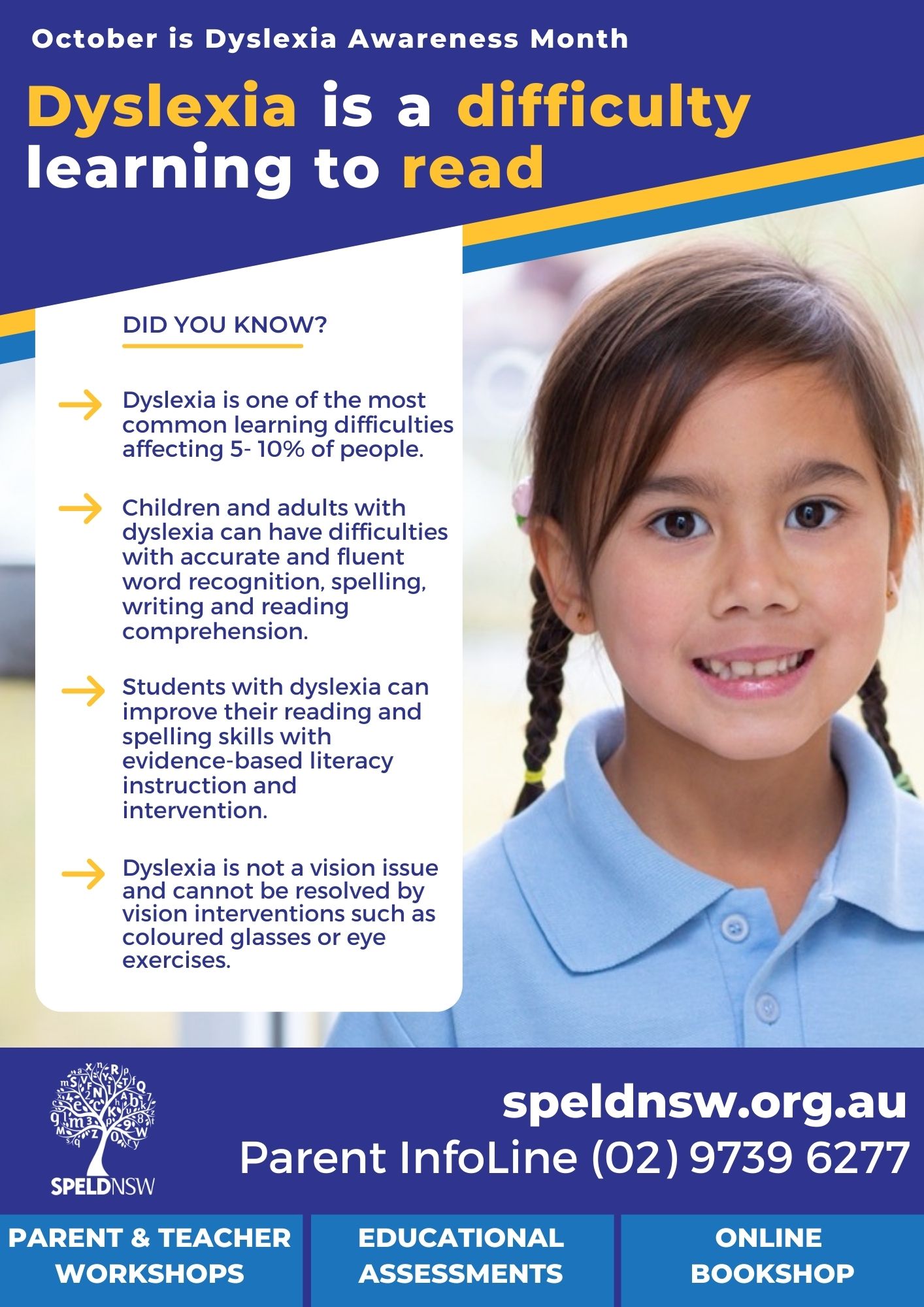
Dyslexia is not a vision issue and cannot be resolved by vision interventions such as coloured glasses or eye exercises.

Students with dyslexia can also struggle with numeracy skills and may also have language disorders or ADHD.

Children and adults with dyslexia can have difficulties with accurate and fluent word recognition, spelling, writing and reading comprehension

Students with dyslexia can improve their reading and spelling skills with evidence-based literacy instruction and intervention.

Did you know? Dyslexia is a learning difficulty affecting five to ten percent of the population. There are students with dyslexia in EVERY classroom.

Download our Zoom background and start a conversation about Dyslexia Awareness at your next meeting!

Thank you for joining us to raise awareness this Dyslexia Awareness Month
Tag us at @SPELDNSW #DyslexiaAwarenessMonth #UntilEveryOneCanRead

Sign up to SPELD NSW Enews for alerts about parent and teacher workshops

Call the SPELD NSW InfoLine to chat confidentially to our friendly support team or for a referral to a tutor

Book an educational assessment with a SPELD NSW Psychologist

Join SPELD NSW to support us in our work advocating for students and adults with dyslexia